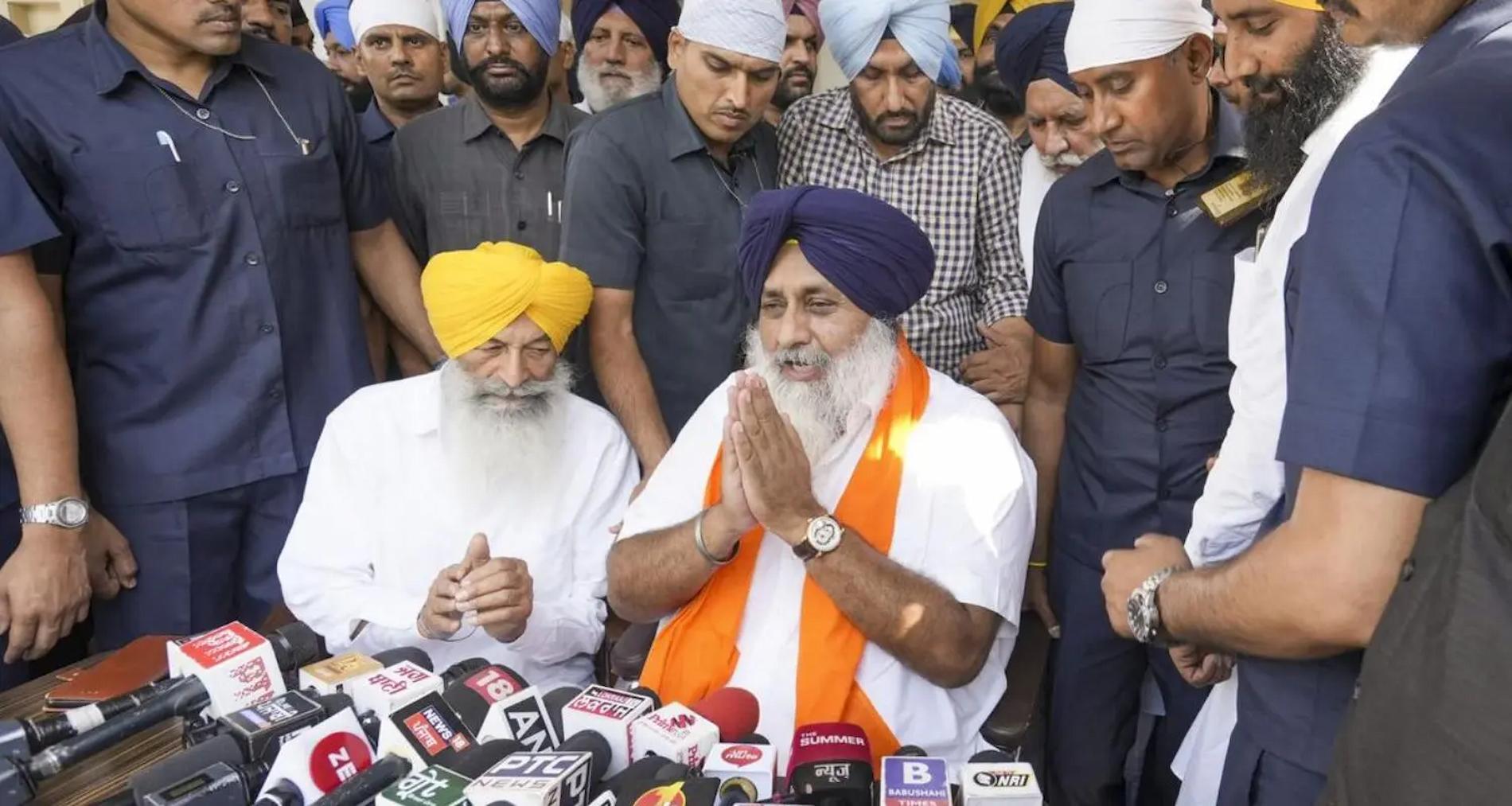
The Shiromani Akali Dal has begun preparing early for the 2027 Punjab Assembly elections with a statewide campaign plan. Party leaders have announced rallies, meetings, and booth-level mobilisation starting in early 2026. The move comes as competition intensifies among major political parties. With all 117 seats at stake, Akali Dal aims to rebuild its rural base and reconnect with traditional voters. Opposition parties are also strengthening their networks. As Punjab enters a long election cycle, early campaigning has become central to political strategy.
Key Takeaways
- Punjab Assembly election due by February 2027
- SAD to begin rallies from early 2026
- Over 150 public meetings planned
- Booth committees covering 24,000 booths
- AAP dominates rural bodies after 2025 polls
- BJP to contest all 117 seats independently
Overview
The Shiromani Akali Dal (SAD) has unveiled an early campaign roadmap for the 2027 Punjab Assembly polls. The party plans to begin large-scale outreach from February and March 2026, nearly a year before voting. The strategy reflects rising political competition and shifting voter dynamics in Punjab.
With the next Punjab Assembly election 2027 scheduled for February 2027, all 117 seats will be contested. Political parties are already mobilising resources and strengthening grassroots networks. SAD president Sukhbir Singh Badal’s leadership has played a central role in shaping this early push. Party leaders say the campaign will highlight achievements in governance, rural development, and social issues. As rivals also intensify preparations, the Akali Dal hopes early engagement will help regain political ground and rebuild voter confidence across urban and rural regions.
Election Timeline and Political Context
The Punjab Legislative Assembly has 117 seats. The next election is due by February 2027. The current Assembly was formed in March 2022. Its five-year term ends in March 2027.
According to the Election Commission’s schedule, polls are usually held 30 to 45 days before the term’s completion. This places voting between January and February 2027. The 2027 Punjab polls timeline has encouraged early preparations.
In the 2022 elections, AAP won 92 seats. Congress secured 18 seats. Akali Dal won only three seats. The BJP and independents combined won four seats. These results reshaped the politics of Punjab 2027 strategies.
The long campaign season has prompted political parties to start outreach almost two years early. The race is expected to remain highly competitive.
Akali Dal’s Early Campaign Strategy
As part of the Shiromani Akali Dal’s 2026 campaign strategy, the party announced statewide rallies for February 2026. These will cover all 23 districts.
According to party sources, over 150 major public meetings are scheduled for March through December 2026. The programme includes statewide SAD rallies in 2026 in Ludhiana, Amritsar, Patiala, Bathinda, and Jalandhar.
On January 28, 2026, Sukhbir Singh Badal chaired a leadership meeting in Chandigarh. Around 85 senior leaders attended. District presidents, zone in-charges, and youth leaders were present.
The meeting finalised booth-level mobilisation plans. Each booth committee will have 12 to 15 members. Punjab has nearly 24,000 polling booths.
The focus is on reconnecting with farmers, traders, and small business owners. Party leaders will also highlight past governance records.
Mobilisation and Organisational Build-up
SAD aims to complete organisational restructuring by February 10, 2026. New district committees are being finalised.
According to party data, 90 percent of booth committees were formed by December 2025. The remaining committees will be completed by early 2026.
Senior leaders have held over 40 district-level meetings since September 2025. In Moga alone, five major meetings were conducted between October and December 2025.
The party plans regular door-to-door campaigns. Around 30,000 volunteers will participate in voter outreach programmes in the Punjab.
Community engagement remains central. SAD leaders are coordinating with gurdwara committees and Sikh organisations. Religious events will be used for social outreach.
Digital campaigns will also expand. The party has set up a 50-member social media team.
Political Landscape and Opposition Activity
While SAD accelerates campaigning, rivals are also active. The BJP has announced plans to contest all 117 seats independently.
On November 14, 2025, BJP leader Ashwani Sharma declared the party’s solo strategy. He rejected alliance talks with the Akali Dal. The BJP aims to increase its 2022 vote share of 6.6 percent.
The ruling AAP remains dominant in rural bodies. In the 2025 zila parishad and panchayat samiti elections, AAP won 1,531 of 2,838 seats. This gave it control over 54 percent of local institutions.
Congress has reshaped its organisation. In December 2025, the party appointed 27 new district presidents. The move aimed to revive its grassroots presence.
These developments have intensified coverage of the 2027 Punjab assembly election across media platforms.
Leadership and Key Political Figures
Sukhbir Singh Badal remains the central architect of SAD’s revival plan. He has addressed over 60 party meetings since mid-2025. His leadership focuses on youth mobilisation and organisational discipline.
Chief Minister Bhagwant Mann continues to lead AAP’s governance narrative. His government highlights welfare schemes and infrastructure projects.
Ashwani Sharma is leading the BJP’s expansion strategy. He is working to strengthen urban and Hindu voter bases.
Congress leaders, including state president Amarinder Singh Raja Warring, are overseeing district restructuring. The party hopes to regain lost support.
These leaders will shape electoral narratives in the coming months.
Core Campaign Themes and Policy Focus
SAD plans to focus on rural development issues in Punjab. These include irrigation, power supply, and farm incomes.
The party will highlight past achievements. These include rural roads, power surplus, and agricultural subsidies during earlier Akali governments.
Unemployment remains a primary concern. According to state data, Punjab’s youth unemployment rate stood at 13.4 percent in 2025.
Drug abuse is another key issue. Official records show over 23,000 NDPS cases were registered in 2024.
Governance and corruption will also feature in campaign speeches. These issues form part of the broader 2026 election strategy narrative.
Public Outreach and Grassroots Engagement
SAD leaders will conduct padyatras and village meetings. Around 5,000 villages will be covered by December 2026.
Special women and youth conventions are planned. The party expects participation from over 200,000 members.
Digital platforms will be used for voter education. WhatsApp groups and mobile apps are being developed.
The party will also assist voters in registration and verification. This links to broader efforts in early poll campaigning in Punjab.
These steps aim to rebuild trust and improve visibility.
Strategic Goals and Electoral Stakes
SAD’s early push reflects lessons from recent setbacks. In the 2025 rural polls, the party won only 412 seats. This was far below AAP’s performance.
The leadership wants to regain influence in the Malwa, Doaba, and Majha regions. These regions account for nearly 80 Assembly seats.
The party aims to increase its vote share from 18.5 percent in 2022 to over 25 percent in 2027.
Engagement with Sikh leaders remains crucial. Religious institutions continue to influence voter sentiment.
Through Akali Dal campaigns for the 2027 Punjab Assembly polls, the party hopes to rebuild its traditional support base.
Role of Media and Political Communication
SAD is strengthening its media outreach. A central communication cell was set up in October 2025.
The cell monitors television debates and social media trends. Daily briefings are issued to district units.
Press conferences will be held twice a month starting in March 2026.
Party leaders believe strong communication is vital in modern elections. This also supports broader coverage of Punjab political updates 2026.
Challenges Ahead
Despite early mobilisation, SAD faces significant challenges. AAP’s strong rural presence remains a hurdle.
The BJP’s independent strategy could split traditional vote blocs. Congress is also rebuilding slowly.
Internal unity remains another concern. Factionalism has affected the party in recent years.
Economic pressures and social issues could reshape voter priorities. SAD must adapt its messaging accordingly.
Akali Dal campaigns for 2027 Punjab Assembly polls: The Road Forward
The early campaign reflects strategic urgency. It signals a shift from reactive politics to proactive engagement.
By starting early, SAD hopes to shape voter narratives. The party believes consistency will deliver results.
Success will depend on organisation, leadership, and public trust.
Conclusion
The Shiromani Akali Dal’s early campaign strategy marks a significant shift in Punjab’s political landscape. By launching outreach well in advance, the party hopes to regain relevance and voter confidence. As rivals also intensify preparations, the next two years will shape the future of Punjab politics.
Follow our platform for verified updates on campaign developments and voter issues ahead of the 2027 Punjab Assembly elections.