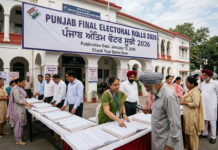
The Punjab rural polls result has reshaped the state’s grassroots political map. The Aam Aadmi Party (AAP) has emerged as the dominant force in rural Punjab, winning over 200 Zila Parishad zones and taking a strong lead in Panchayat Samitis. The Congress secured second place with 60 zones, followed by the Shiromani Akali Dal (SAD) with 39 zones, while the Bhartiya Janta Party (BJP) won 4, the BSP 3, and Independents claimed 10 zones, according to the results. The outcome signals growing rural acceptance of the Bhagwant Mann government’s policies and weakens traditional power bases of Congress and the Shiromani Akali Dal. With these results, Punjab’s village-level politics enters a new phase, offering strong signals ahead of larger electoral battles in the state.
Key Takeaways
- AAP wins over 200 Zila Parishad zones.
- Strong lead in Panchayat Samiti results in Punjab.
- Congress and Akali Dal face rural setbacks.
- BJP struggles to expand village presence.
- Results strengthen AAP ahead of Assembly elections.
- Rural voters prioritised governance and service delivery.
Introduction
The Punjab Rural Poll Results 2025 have delivered a decisive message from the countryside.
In a major boost to the ruling Aam Aadmi Party, AAP has secured victories in more than 200 Zila Parishad zones and established a clear lead in Panchayat Samiti seats. These elections, held across Punjab’s rural heartland, are considered a crucial barometer of grassroots sentiment and governance approval.
The results underline AAP’s growing influence beyond urban centres and reflect shifting loyalties among rural voters. Traditional rural strongholds of Congress and the Shiromani Akali Dal have faced significant setbacks, while the BJP continues to struggle with limited rural penetration. Political analysts view the outcome as an endorsement of the Bhagwant Mann government’s rural outreach, welfare schemes, and administrative approach. The Punjab Rural Poll Results 2025 are also being seen as a key indicator ahead of the 2025 Assembly elections.
Election Context and Background
The Punjab rural local body elections play a vital role in the state’s democratic structure.
Zila Parishads and Panchayat Samitis act as the backbone of rural governance. They oversee development works, local infrastructure, welfare scheme implementation, and coordination with state authorities.
The elections were conducted under the supervision of the State Election Commission, following a phased schedule. Counting took place amid tight security arrangements. The polls covered hundreds of rural zones, making them one of Punjab’s largest grassroots electoral exercises.
The Punjab rural polls 2025 were keenly watched, as they offered insight into public satisfaction with the current government. Rural voters often judge parties based on service delivery rather than national narratives. This made the results politically significant.
Overall Results Snapshot
The Punjab rural polls result placed AAP firmly in the lead.
The party won over 200 zones in the Punjab Zila Parishad election 2025 and established a comfortable lead in several Panchayat Samiti areas.
Congress followed at a distant second, managing wins in select pockets. The Shiromani Akali Dal retained influence in limited traditional belts but lost ground overall. BJP candidates remained marginal players, while independents made small gains in scattered regions.
The numbers reflect a clear consolidation of rural votes in AAP’s favour. Political observers say the results show consistency across regions rather than isolated wins.
Party-Wise Performance Analysis
AAP’s Performance
AAP’s success in the AAP rural elections in Punjab was broad-based.
The party performed strongly in Malwa, Doaba, and parts of Majha. Its candidates benefited from coordinated campaigns and local volunteer networks.
The party’s emphasis on schools, health centres, electricity subsidies, and anti-corruption messaging resonated with rural voters. Several first-time candidates also won convincingly, signalling voter openness to new leadership.
Congress and Akali Dal
Congress retained pockets of influence but failed to match its earlier rural dominance. Internal factionalism and weak grassroots mobilisation affected its performance.
The Akali Dal rural elections outcome showed erosion of traditional vote banks. Analysts say the party struggled to counter AAP’s narrative of change and governance.
BJP and Independents
BJP’s rural Punjab politics remain a challenge. Limited organisational depth in villages restricted its reach.
Independent candidates and rebels won a few seats, mostly due to personal influence rather than party backing.
Political Significance of AAP’s Win
AAP’s rural sweep marks a strategic breakthrough.
The results strengthen the party’s claim of inclusive governance and grassroots connectivity. The victory reinforces confidence in the Bhagwant Mann government and its rural development agenda.
Political experts say this outcome boosts AAP’s credibility ahead of the Punjab Assembly Elections 2025. It also weakens opposition narratives questioning AAP’s rural acceptance.
The Punjab Rural Poll Results 2025 suggest that AAP has moved beyond being an urban-centric party.
Voter Turnout and Public Response
Voter participation remained steady across districts.
While some areas recorded moderate turnout, others saw enthusiastic participation, especially among young voters and women.
Residents cited local development works, access to government services, and leadership style as key factors. Several sarpanches and community leaders said voters preferred performance over legacy politics.
The voter turnout in rural areas of Punjab reflected a desire for stability and governance that prioritises service.
Reactions from Political Parties
AAP leaders described the outcome as a “people’s mandate.”
They credited volunteers and grassroots workers for the success.
Congress leaders acknowledged setbacks but said the party would introspect and reorganise.
Akali Dal leaders expressed concern over the declining support in rural areas.
BJP representatives stated that the party would strengthen its rural strategy ahead of future elections.
Impact on the Punjab Political Landscape
The results alter Punjab’s rural power equations.
AAP’s dominance reduces space for traditional alliances and may trigger internal churn within opposition parties.
Political watchers anticipate increased defections and realignments. The outcome also sets the tone for upcoming state and national elections.
The Punjab politics 2025 narrative now centres on governance performance rather than identity politics.
Historical Comparison
Earlier rural polls were dominated by Congress and the Akali Dal.
Since 2022, AAP has steadily expanded its footprint in villages.
The current results mark a shift from decades-old patterns. Analysts see this as a structural change rather than a temporary swing.
Expert Opinions
Political strategists describe the result as a governance endorsement.
Some analysts caution that sustaining rural support requires continued delivery.
Others argue the verdict reflects voter fatigue with traditional parties. Long-term implications include AAP’s emergence as Punjab’s principal rural force.
Conclusion
The Punjab Rural Poll Results 2025 confirm a major political shift.
AAP’s sweeping rural performance signals growing trust among village voters. The verdict reshapes Punjab’s grassroots politics and sends a clear message to opposition parties.
As Punjab moves towards bigger electoral contests, rural governance will remain a decisive factor.