Punjab Finalizes Voter Rolls for All 117 Assembly Seats
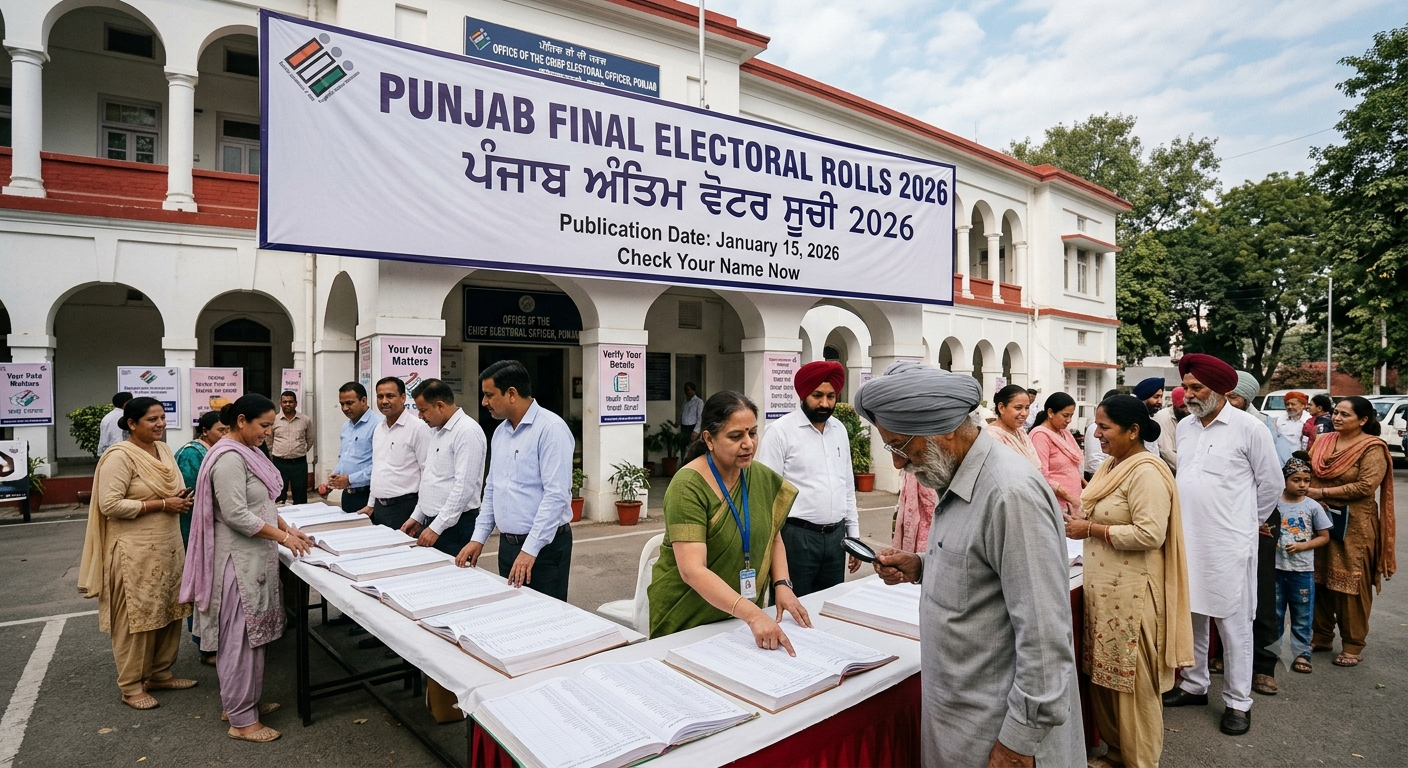
Punjab has completed its Special Intensive Revision of electoral rolls, publishing a final voter list on October 12, 2026, covering all 117 Assembly constituencies. The updated register records more than 2.01 crore electors, including men, women, and third-gender voters. New enrollments, name deletions, and expanded polling arrangements put voter verification in focus ahead of the 2027 Assembly elections.
Punjab has published its final electoral rolls following the completion of the Special Intensive Revision (SIR), recording 2,01,00,727 electors across all 117 Assembly constituencies on October 12, 2026. The announcement marks an important step in preparations for the next state election, expected in 2027, and provides voters with an updated record to check before polling begins.
The Punjab final electoral rolls 2026 reflect a substantial change in the state’s registered electorate. Although the final list contains more voters than the draft published in August, the total remains significantly below the number registered before the revision began in June. Understanding these different comparisons is essential to interpreting the figures accurately.
Punjab Chief Electoral Officer Anindita Mitra oversaw the exercise, which included voter verification, new registrations, corrections, and the removal of entries found ineligible under the applicable rules. Representatives of several major political parties also commented on the process, making transparency and public confidence important parts of the discussion.
Key Takeaways
- Final publication: The Election Commission published the final voter list on October 12, 2026, covering all 117 Punjab Assembly constituencies.
- Total electorate: Punjab recorded 2,01,00,727 voters, comprising 1,03,76,026 men, 97,24,195 women, and 506 third-gender electors.
- Revision timeline: The exercise began on June 25, 2026. Draft rolls appeared on August 13, followed by a claims-and-objections period from August 13 through September 12.
- Voter additions and deletions: The draft listed 1,93,94,435 electors. The final list increased by 7,06,292 compared with that draft, while 7,97,263 new electors were reported as enrolled during the revision process.
- Polling infrastructure: The number of polling stations rose from 24,453 to 25,332 to improve voter access across the state.
- Political responses: Representatives of the Indian National Congress, Aam Aadmi Party (AAP), Shiromani Akali Dal (SAD), and Bharatiya Janata Party (BJP) praised aspects of the Punjab CEO’s handling of the exercise, while their comments should not be taken as blanket agreement on SIR nationwide.
What Changed in Punjab’s Voter List?
Final Electorate Crosses Two Crore
The final voter register includes slightly more than two crore electors. According to reports, the final total is 13,60,316 lower than the pre-revision electorate of 2,14,61,043 recorded on June 9, 2026. This represents a decline of approximately 6.33%.
However, the comparison with the draft roll tells a different story. The August draft contained 1,93,94,435 electors, meaning the final list grew by 3.64% after the subsequent revision and claims process.
| Voter-list measure | Number of electors |
|---|---|
| Before SIR, June 9 | 2,14,61,043 |
| Draft roll, August 13 | 1,93,94,435 |
| Final roll, October 12 | 2,01,00,727 |
| Increase from draft to final | 7,06,292 |
| Net decline from pre-SIR total | 13,60,316 |
The figures show why additions and deletions must be distinguished from the overall change in the electorate. The 7,97,263 reported new enrollments are not the same as the net increase between the draft and final totals. The latter reflects the combined effect of additions and other changes made during the process.
Gender-Wise Voter Breakdown
The final list includes a substantial number of women voters, alongside male and third-gender electors. The published figures are:
| Category | Final electors |
|---|---|
| Male | 1,03,76,026 |
| Female | 97,24,195 |
| Third gender | 506 |
| Total | 2,01,00,727 |
The gender totals add up to the reported statewide electorate. Publishing these figures helps readers understand the composition of the electorate without confusing registered voters with the number who will actually cast ballots.
SIR Timeline and Verification Process
From June Enrollment to October Publication
Punjab’s revision process began on June 25, 2026. The draft list was released on August 13, allowing electors and political representatives to identify omissions, incorrect entries, and other issues during the claims-and-objections period.
That period ran through September 12. After further verification and consideration of submissions, the final register was published on October 12.
Notices were issued to 35,49,036 electors during the verification process, and 86,038 people were marked ineligible following verification and speaking orders. These figures describe reported outcomes of the review; they should not be interpreted as evidence that every deleted entry was individually challenged.
Why Voters Should Check Their Entries
The completion of the revision does not remove the need for individuals to verify their own details. Eligible residents should confirm that their names, addresses, and other particulars appear correctly in the final register.
Voters can consult the Election Commission of India’s official voter services website or the Punjab Chief Electoral Officer’s website to locate electoral rolls and relevant enrollment information. Anyone whose name is missing should contact the appropriate Electoral Registration Officer or use the official voter services channels to determine the correct application or correction procedure.
Polling Stations and Voter Access
The revision also involved changes to polling infrastructure. The number of polling stations increased from 24,453 to 25,332, an addition of 879 stations. The aim, according to reports, was to improve accessibility and distribute polling arrangements more effectively.
The final register also covers several voter categories that require attention in election planning:
- Young electors aged 18-19: 2,93,049.
- Electors aged 85 and above: 1,56,597.
- Service electors: 94,172.
- Non-resident Indian (NRI) electors: 3,397.
- Electors with disabilities: 1,45,179.
These categories help authorities and election stakeholders assess registration coverage and plan appropriate assistance. The reported 100% EPIC and photo coverage is another key administrative measure, although voters should still check their own entries rather than assume that documentation alone guarantees a correct registration.
Political Parties Respond to the Revision
The publication of the final rolls drew positive comments from representatives of major political parties in Punjab. Their reactions are significant because voter-list revisions can attract intense political scrutiny, particularly before an Assembly election.
Congress, AAP, SAD, and BJP
Congress representative Hardeep Singh Kingra praised Chief Electoral Officer Anindita Mitra’s responsiveness and said political parties had been kept informed during the process. AAP legal-cell representative Ferry Sofat also expressed satisfaction with the way the exercise was handled.
SAD spokesperson and advocate Arshdeep Singh Kler said the party had initially raised concerns and that its suggestions were considered during the revision. BJP representatives praised Mitra, alongside comments from the other three parties.
These reactions concern the handling of the exercise in Punjab. They should not automatically be read as support for every aspect of the Election Commission of India’s SIR approach in other states, where political disagreements and allegations have continued.
Constituency-Level Figures and the 2027 Election
The statewide total does not mean that every constituency has a similar electorate. Reported constituency-level figures show Dera Bassi with 2,79,857 electors, the highest total, and Ludhiana Central with 1,13,241, the lowest.
These differences matter for local election administration, including polling-station allocation, voter communication, and the distribution of election personnel. They do not, by themselves, predict the result of a constituency contest.
The Punjab final electoral rolls 2026 will serve as an important reference for parties, candidates, election officials, and citizens as preparations continue for the 2027 Punjab Assembly elections. The register provides an updated starting point, but the quality of the process ultimately depends on eligible voters being correctly listed and being able to exercise their rights.
Final Word: Check Before Election Day
Punjab’s final voter register is now published, bringing the statewide revision exercise to a close and setting an important administrative milestone before the next Assembly election. The figures show both substantial changes from the pre-revision electorate and an increase over the draft list. Voters should check their registration details early, raise any concerns through official election channels, and follow verified announcements from election authorities. Accurate records, accessible polling arrangements, and transparent procedures will remain essential to public confidence in the electoral process.