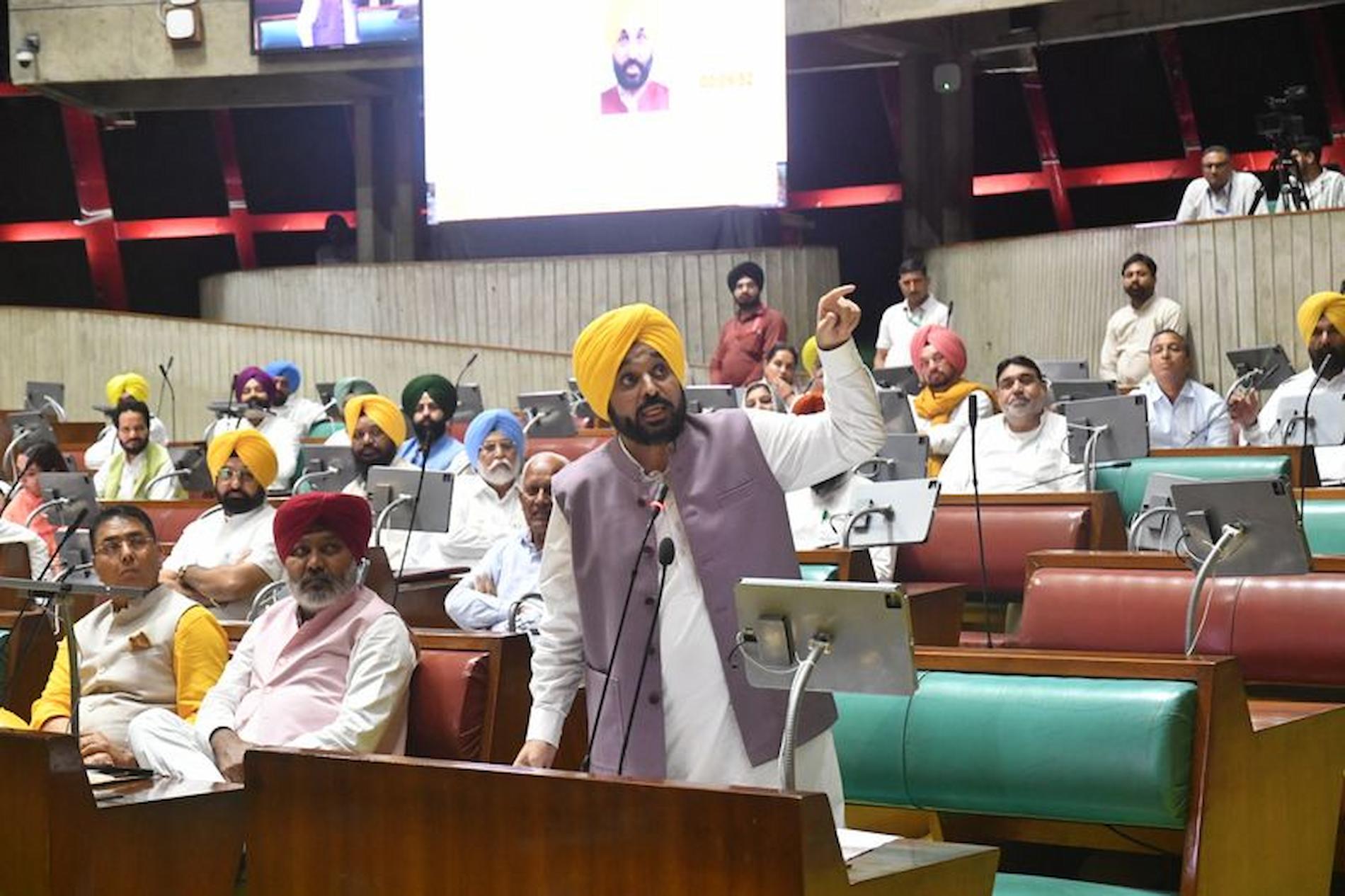
Punjab Chief Minister Bhagwant Mann has launched a strong attack on the India Meteorological Department (IMD), accusing it of issuing faulty weather predictions that left Punjab’s farmers vulnerable. At the same time, he alleged that opposition parties are playing politics instead of extending genuine help during the crisis. His remarks have sparked a political storm, as both Congress and BJP leaders hit back, calling Mann’s statements an attempt to shift blame. Farmers, meanwhile, are demanding accountability, as inaccurate forecasts have resulted in lost crops and livelihoods.
Introduction
In a sharp rebuke, Punjab Chief Minister Bhagwant Mann has directly held the India Meteorological Department (IMD) responsible for flawed weather forecasts that have hurt the state’s farming community. Speaking at a public address, Mann argued that the inaccurate forecasts prevented farmers and the administration from taking precautionary steps. At the same time, he accused the opposition of indulging in politics at a time when people needed assistance. The clash has intensified debates over institutional accountability and political responsibility. As the crisis deepens, questions are now being raised about the accuracy of IMD predictions, the role of political parties, and the preparedness of the Punjab government. With agricultural livelihoods at stake, the issue has become a flashpoint in Punjab’s volatile political landscape.
Punjab CM Mann’s Statement
Chief Minister Bhagwant Mann openly criticised the India Meteorological Department for releasing incorrect weather predictions in recent weeks. He stated that farmers, who rely on timely forecasts for sowing and harvesting, were misled. According to him, this mistake worsened the crisis in Punjab. The Punjab CM Mann IMD criticism highlighted that weather predictions must be scientific, accurate, and dependable. He warned that inaccurate information can lead to significant economic losses for the state. Mann emphasised that the government had prepared contingency measures, but poor forecasts created unnecessary hurdles.
Impact of Faulty Forecasts on Punjab Farmers
Punjab’s economy heavily depends on agriculture, and farmers remain sensitive to weather fluctuations. Wrong predictions of rainfall and storms left many unprepared. The Punjab farmers affected by weather mispredictions faced crop damage, particularly in paddy and cotton regions. Farmers claimed they lost resources because they trusted official updates. Agriculture experts explained that even slight errors can affect yield quality and productivity. This has triggered anger among rural communities. For farmers already facing financial stress, incorrect forecasts have compounded their uncertainty. Many demanded stronger systems and accountability for the IMD.
Mann Accuses Opposition of Playing Politics
Mann did not restrict his criticism to the IMD. He also alleged that opposition leaders were using the crisis for electoral gains. He said the opposition should stand with farmers rather than exploit their difficulties. The Mann accuses the opposition of a political narrative that has intensified discussions in Punjab’s political corridors. Mann claimed opposition parties are attempting to weaken the government’s credibility before the public. He urged them to extend cooperation instead of blame. This political blame game has only deepened the crisis, with ordinary citizens stuck in the middle.
Response from Opposition Political Parties
The criticism immediately drew sharp reactions from the opposition political parties in Punjab. Congress leaders accused Mann of passing the buck instead of addressing the crisis with concrete solutions. BJP leaders argued that blaming the IMD was an excuse to cover the government’s shortcomings. Shiromani Akali Dal (SAD) representatives highlighted that Punjab’s farmers needed compensation, not political speeches. They accused Mann of lacking leadership during emergencies. The exchange between Bhagwant Mann and the opposition has therefore evolved into a broader debate on governance, accountability, and electoral strategies in the state.
Public and Farmers’ Reaction
Farmers, the worst affected, have voiced frustration at both the government and the opposition. They feel abandoned during the crisis. Many farmers said they planned their harvesting based on official IMD alerts, only to suffer significant losses. While Mann criticised the agency, farmers insisted that accountability cannot end with blame. The opposition politics amid the Punjab crisis have only left ordinary citizens feeling neglected. Farmer unions are demanding compensation packages, insurance reforms, and reliable weather information systems. Public opinion suggests that people prefer political unity over constant clashes during emergencies.
Punjab Government’s Response to the Crisis
Despite the criticism, the government has announced relief measures to support affected farmers. Crop damage surveys are underway in the districts most severely affected by faulty forecasts. Officials are exploring financial aid, compensation, and insurance coverage. The Punjab government’s response to IMD errors also includes demands for improved coordination between the state and central agencies. Mann has pressed for real-time data sharing and technology upgrades in forecasting. The administration believes this will prevent future crises. These actions aim to rebuild trust among citizens and farmers who depend on accurate information.
National Debate on IMD Accuracy
The controversy has reignited the debate over the accuracy of IMD forecasts at the national level. Experts argue that India’s weather patterns are becoming increasingly unpredictable due to climate change. However, critics believe the IMD must modernise its forecasting systems with cutting-edge technology. Other states have also reported dissatisfaction with IMD alerts in recent months. The debate raises a larger question: how reliable is India’s weather prediction system in the face of extreme conditions? Punjab’s crisis has become a case study of how even minor forecasting lapses can disrupt millions of lives.
Mann Criticises IMD and Accuses Opposition of Politics
The issue reflects a larger battle between governance and politics. While Mann criticises IMD and accuses the opposition of politics, farmers argue that both sides must focus on solutions. The controversy has also taken a political colour ahead of the upcoming elections in Punjab. Opposition parties are seizing the chance to weaken Mann’s credibility. However, the government insists that supporting citizens must take precedence over politics. This repeated conflict underlines the state’s fragile balance between agricultural dependence and political competition.
Future Preparedness and Solutions
Punjab’s experience underscores the importance of long-term preparedness. Experts recommend collaboration between the IMD, state governments, and universities for accurate forecasting. Investment in satellite technology and AI-based prediction tools could improve reliability. Farmers should also be trained to use diversified sources of weather information. The government has announced initiatives to strengthen data infrastructure. Collaborative strategies, insurance schemes, and disaster relief planning will be crucial. Without reforms, crises will continue. The state must learn from this episode and prepare in advance to prevent similar incidents in the future. Political parties, too, must cooperate for the greater good.
Conclusion
The controversy involving faulty forecasts has exposed gaps in India’s weather system and Punjab’s political landscape. While Mann criticises IMD and accuses the opposition of politics, citizens want accountability and unity. Farmers remain at the heart of the crisis, demanding reliable information and meaningful assistance. Political rivalries, if unchecked, may worsen their struggles. The way forward requires technology, transparency, and collaboration between agencies and leaders. Only then can Punjab move beyond blame and strengthen resilience.
Stay informed with our in-depth political news and support responsible journalism that gives a voice to citizens’ concerns.