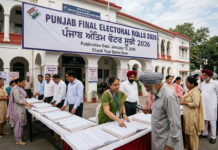
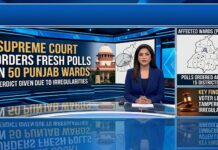
Punjab’s political scene heated up after a stormy allegation. The Aam Aadmi Party (AAP) Punjab President accused the Bharatiya Janata Party (BJP) of “vote chori,” claiming systematic attempts to manipulate voter rolls. The charge comes at a crucial time, with the Punjab elections 2025 on the horizon. The explosive statement has reignited debate about electoral fairness, accountability, and transparency. While AAP is firm on its charge, the BJP has strongly denied wrongdoing. The matter has sparked widespread attention, drawing in voters, political observers, and the Election Commission of India.
Introduction
The political temperature in Punjab rose sharply this week after AAP Punjab President alleges BJP of vote chori, accusing the saffron party of manipulating the electoral process. The claim, made during a high-profile press conference, has amplified ongoing debates about voter rights, democratic integrity, and election management ahead of the 2025 Punjab polls. AAP leaders allege that BJP-backed groups are deliberately tampering with voter lists, removing genuine names, and enrolling fake voters. The charges echo earlier allegations made by senior AAP leader Arvind Kejriwal in Delhi. BJP has dismissed the accusations as baseless and politically motivated. The confrontation highlights the intensifying rivalry between the two parties, with voters watching closely. The controversy now places the Election Commission of India under pressure to ensure fair elections.
The Allegation in Detail
The Aam Aadmi Party’s Punjab leadership did not mince words. During a press briefing in Chandigarh, AAP Punjab President accused the BJP of vote chori. According to him, the ruling party is “using backdoor tactics” to weaken AAP’s voter base. He alleged that the names of legitimate voters, particularly from minority and weaker sections, were being deleted in targeted constituencies.
The AAP leader said the party had gathered ground-level evidence of missing names. He pointed to specific examples from past municipal polls, where thousands of voters allegedly could not cast their ballots. The allegation has stirred debate, with critics calling it a serious threat to Punjab’s democratic fabric.
The controversy falls under what has been described as the AAP Punjab vote chori allegation, which has quickly become a trending political phrase in the state.
Target the BJP
The direct target of the allegation is the Bharatiya Janata Party, which has been expanding its base in Punjab since 2022. AAP leaders claim the BJP is desperate to consolidate power and is resorting to unfair means.
“This is not just political competition. It is theft of democracy,” the AAP Punjab President said. The opposition further charged that BJP workers were allegedly colluding with local officials to tamper with voter rolls.
This accusation has intensified the BJP accusation of vote theft Punjab debate. The saffron party has already been accused by rivals in other states of similar tactics, though none have been conclusively proven.
Political Context
The allegation gains significance against the backdrop of the upcoming Punjab elections in 2025. The Aam Aadmi Party, currently in power in Punjab, is positioning itself as the defender of democracy.
The claim has set the stage for a heated AAP vs BJP political clash in Punjab, where both parties are fighting for dominance. While the BJP is attempting to strengthen its foothold after breaking ties with the Shiromani Akali Dal, the AAP is seeking to defend its governance record.
The controversy also resonates nationally, as opposition parties under the INDIA bloc have repeatedly accused the BJP of undermining democratic processes. Analysts believe these charges could shape the narrative for the 2025 elections, not only in Punjab but across India.
BJP’s Response
Unsurprisingly, the BJP rejected the allegations outright. Party spokespersons termed them as “politically motivated” and “a tactic to divert attention from AAP’s failures in Punjab.”
According to the BJP, AAP is facing discontent due to governance challenges and is resorting to sensational charges. A senior BJP leader said, “The people of Punjab know the truth. We don’t need to steal votes to win.”
This rebuttal adds another layer to the BJP’s response to AAP allegations, suggesting that the saffron party will aggressively counter the narrative. BJP leaders have also urged the Election Commission to take note of AAP’s “irresponsible statements.”
AAP’s Strategy
AAP’s strategy appears to be two-fold. Firstly, it wants to corner the BJP on the issue of electoral integrity. Secondly, it aims to galvanise its voter base by projecting itself as a victim of “undemocratic practices.”
By highlighting alleged tampering, AAP seeks to rally support among urban and rural voters who fear disenfranchisement. The leadership has said it will submit complaints to the Election Commission and demand strict action.
This move is seen as part of a larger opposition plan to question the BJP’s credibility in managing elections. Observers believe this is a critical part of AAP’s attempt to sustain its hold in Punjab while aligning with the INDIA bloc nationally.
The narrative strongly reflects AAP President targeting BJP vote fraud as a defining theme of the party’s election campaign.
Impact on Voters
The allegation has created mixed reactions among voters. Supporters of AAP feel the charges are credible, pointing to past irregularities in voter rolls. Critics, however, argue that AAP is simply preparing excuses ahead of elections.
Regardless of perspective, the controversy has put the spotlight on electoral fairness. It raises the question: can voters trust the system to protect their right to vote?
Political analysts suggest this issue could influence undecided voters in close constituencies. It has also added to the Punjab elections 2025 controversies, which are shaping the narrative around governance, corruption, and democratic processes.
ECI’s Role
The Election Commission of India is now under pressure to act decisively. AAP has demanded an independent inquiry into the alleged voter list manipulations. BJP has urged ECI to warn AAP against “false propaganda.”
The credibility of the electoral body is at stake. If ECI fails to investigate effectively, it could fuel suspicion among voters. On the other hand, a strict probe could either validate or disprove the charges.
Analysts note that ECI’s handling of this case will set the tone for upcoming polls. Its response will decide whether the issue remains a political flashpoint or is resolved through due process.
Broader Opposition Narrative
The allegation is not isolated. It ties into a broader opposition narrative accusing the BJP of manipulating electoral systems. Leaders from Congress, TMC, and other INDIA bloc parties have echoed similar concerns in recent months.
By amplifying the AAP claims of election malpractice BJP narrative, the party aligns itself with a national movement to question the integrity of the electoral process.
If sustained, this could strengthen opposition unity but also deepen political polarisation.
The Political Battle Ahead
Punjab is emerging as a key battleground. For the BJP, making inroads here is crucial for expanding its national footprint. For AAP, defending Punjab is essential to remain a force beyond Delhi.
The current standoff signals a fierce political battle AAP BJP Punjab that will likely intensify as elections draw closer. Voters will be watching closely as both parties trade charges and countercharges.
Conclusion
The row sparked after AAP Punjab President alleged BJP of vote chori, highlighting the deep mistrust between India’s ruling party and the opposition. While AAP positions itself as a guardian of democratic rights, BJP insists the accusations are nothing more than political theatre.
The Election Commission’s response will be critical in shaping perceptions. With Punjab elections approaching, the controversy will remain a central issue, potentially redefining alliances and voter sentiments.
Stay updated with the latest political developments shaping Punjab and India—follow our portal for verified news and in-depth analysis.