Punjab SIR Row: Warring Flags Voter Concerns
Punjab’s electoral-roll revision has entered a politically sensitive phase after Congress leader Amarinder Singh Raja Warring wrote to Union Home Minister Amit Shah over alleged difficulties faced by first-time voters. The dispute centers on registration requirements, Form 6, an additional declaration, old electoral records, citizenship documentation, and the October 12 deadline for the final roll.
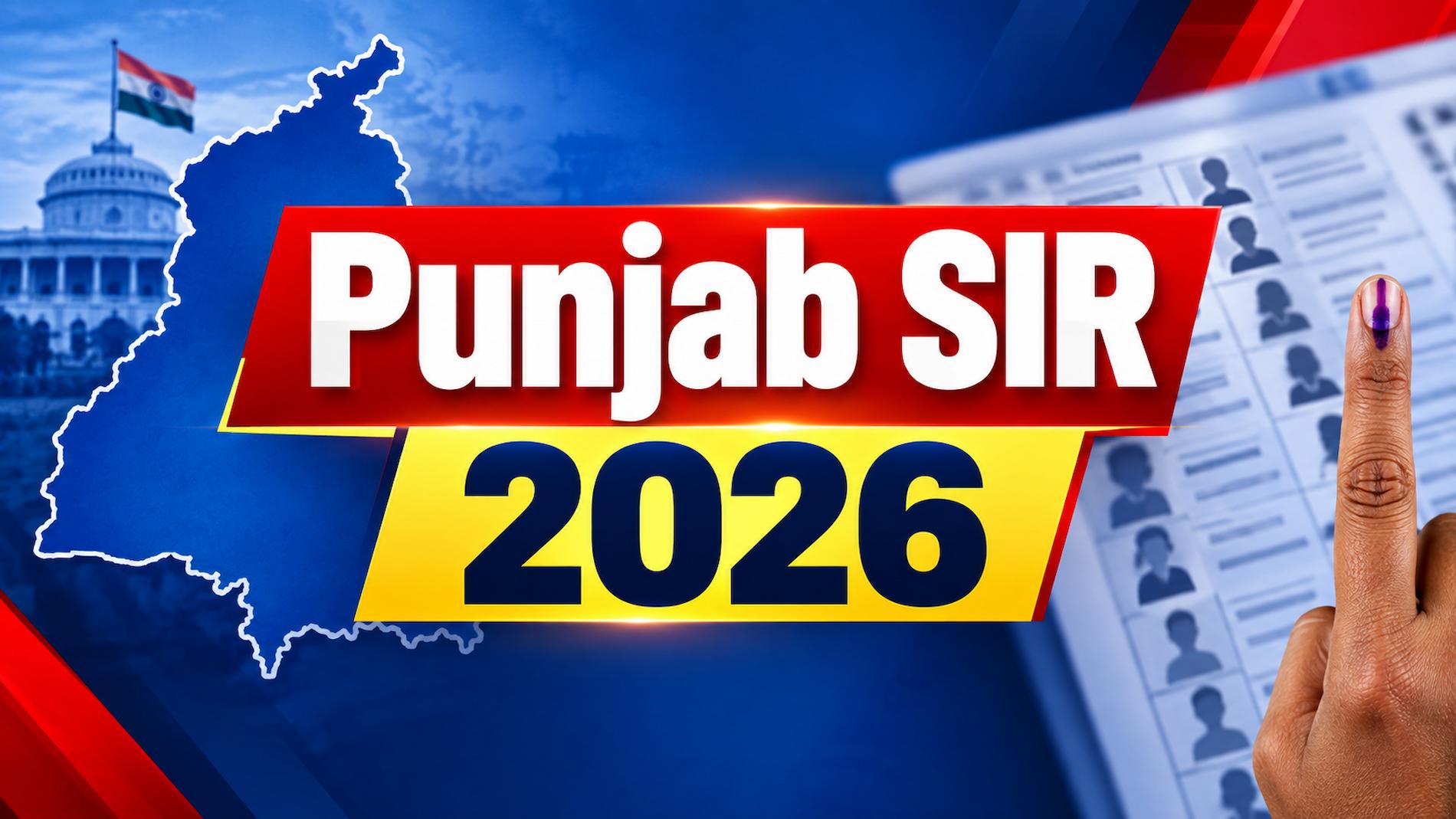
The Punjab SIR Row 2026 has brought first-time voter registration into sharp focus as Punjab moves toward the finalization of its electoral rolls ahead of the 2027 Assembly election. Punjab Congress president and Ludhiana MP Amarinder Singh Raja Warring wrote to Union Home Minister Amit Shah on September 29, alleging that some young voters seeking enrolment were turned away during the Special Intensive Revision of electoral rolls.
Warring said some people who had reached 18 and approached authorities with Form 6 were allegedly asked to establish the electoral-roll status of their parents or grandparents in records dating back more than two decades. The claim is political and should not be treated as evidence that all first-time voters were rejected. The Election Commission has separately clarified that Form 6 itself was not changed and that an additional Annexure D declaration was introduced under SIR instructions.
Takeaway: Six Points to Know
- September 29, 2026: Punjab Congress president Amarinder Singh Raja Warring wrote to Amit Shah over alleged difficulties faced by first-time voters during SIR.
- June 25 to August 3: Punjab’s house-to-house enumeration phase covered all 23 districts and 117 Assembly constituencies, with 1,93,94,408 enumeration forms collected and digitized.
- August 13: The draft electoral roll was published, beginning the claims and objections period that ran until September 12. Disposal of claims was scheduled through October 8, with the final roll scheduled for October 12.
- Punjab had 2,14,61,043 registered electors as of June 9, while 20,66,635 entries were classified as absent, shifted, deceased, or duplicate during enumeration.
- The ECI says Form 6 remained unchanged, while an additional Annexure D was introduced alongside it under SIR instructions.
- The dispute is especially significant because the final electoral roll is scheduled for publication on October 12, 2026, before Punjab’s next Assembly election.
What Did Raja Warring Tell Amit Shah?
The latest Punjab SIR update centers on Warring’s September 29 letter to the Union Home Minister. According to The Times of India, Warring said young men and women from different Assembly constituencies had reached the age of 18 and attempted to register through Form 6 but were allegedly asked to establish whether their parents or grandparents appeared in electoral rolls from the previous intensive revision.
The allegation is narrower than saying that new voters across Punjab were universally denied registration. Warring’s complaint concerns applicants whom he says encountered this difficulty.
He asked Shah to intervene because he framed the matter partly as a citizenship-documentation issue. His letter sought clarity on documents that can establish Indian citizenship and asked for a clearly defined list of documents that authorities, including election officials, should accept.
Warring also sought acceptance of Form 6 applications under continuous electoral-roll updating without the disputed parent or grandparent linkage declaration in the circumstances described in his letter.
Why Are First-Time Voters Facing Questions During SIR?
The dispute becomes easier to understand by looking at the Punjab electoral roll revision process.
Punjab’s SIR involved mapping current voters against earlier electoral records, including the 2003 rolls. During the enumeration phase, around 12 lakh forms could not initially be mapped against the 2003 electoral rolls. Chief Electoral Officer Anindita Mitra said such voters would receive notices and be asked to submit relevant documents.
For a young person who was not yet born, or was too young to appear as an elector in the earlier roll, establishing a direct historical electoral entry can naturally present a practical issue. This is the central concern raised by Warring.
Why the 2003 Roll Matters
The previous SIR reference is important because Punjab’s current exercise is not simply an ordinary annual voter-list update. It involves verification and mapping of existing entries against earlier electoral records.
The Election Commission’s process allows voters who are left out of the draft roll to pursue claims and objections. Punjab officials specifically said eligible voters could submit Form 6 online or offline between August 13 and September 12.
That means the 20.66 lakh entries excluded from the draft should not automatically be interpreted as people permanently barred from voting. The categories included deceased, permanently shifted, untraceable or duplicate entries, and the prescribed claims process provided an opportunity for correction or inclusion.
What Is Form 6 and What Is Annexure D?
The Punjab SIR Form 6 issue has become one of the most discussed aspects of the controversy.
Form 6 is the standard application used to register as a new elector. The ECI’s voter-services material confirms that Form 6 is used for new voter registration.
However, during the SIR process, the Election Commission said an additional declaration, known as Annexure D, was required alongside Form 6 or Form 8 under SIR instructions.
ECI’s Important Distinction
The ECI has explicitly said there was “no change” to Form 6 itself. According to its clarification reported by India Today, the parent or grandparent linkage requirement was introduced through a separate declaration accompanying the existing Form 6. The ECI referred to SIR instructions issued on June 24, 2025.
This distinction matters for anyone researching first-time voter registration Punjab because it would be inaccurate to describe the issue simply as the Election Commission rewriting Form 6.
As of September 30, the broader debate around the additional declaration has also continued at the national level. Reports said the ECI decided to withdraw the SIR-related add-on in states where the revision process had already concluded, while the requirement remained relevant in areas where SIR was still underway.
Punjab SIR 2026: Key Dates and Numbers
The Punjab SIR voter list 2026 process has involved a large administrative operation.
Punjab SIR in Numbers
- 2,14,61,043: Registered electors as of June 9, 2026.
- 1,93,94,408: Enumeration forms collected and digitized.
- 90.37%: Approximate enumeration coverage.
- 20,66,635: Entries classified as absent, shifted, deceased, or duplicate.
- 9,44,131: Permanently shifted.
- 5,74,568: Deceased.
- 4,12,715: Untraceable or absent.
- 1,19,145: Duplicate or already enrolled elsewhere.
The exercise covered 23 districts and 117 Assembly constituencies. Election machinery included 23 District Election Officers, 117 Electoral Registration Officers, 234 Assistant Electoral Registration Officers, 2,501 supervisors and 24,453 Booth Level Officers. Recognized political parties appointed a combined 87,966 Booth Level Agents.
Key Schedule
- June 25, 2026: House-to-house enumeration began.
- August 3: Extended enumeration and digitization deadline ended.
- August 13: Draft electoral roll published.
- August 13 to September 12: Claims and objections period.
- October 8: Disposal of claims and objections scheduled.
- October 12: Final electoral roll scheduled for publication.
The September 12 deadline was particularly significant because applications and objections received by then formed part of the process leading toward the final roll.
What Does the Election Commission Say?
The Election Commission’s position provides an important counterpoint to the Punjab SIR news surrounding Warring’s allegations.
The ECI maintains that Form 6 itself was not altered. Its explanation is that Annexure D was an additional declaration required under SIR instructions.
Punjab Chief Electoral Officer Anindita Mitra has also said eligible voters would not simply be deleted because they could not initially be mapped. Officials said unmapped voters would receive notices and opportunities to submit documents, while claims and objections could be filed during the prescribed period.
The ECI’s general voter-registration guidance states that an eligible elector must be an Indian citizen, be at least 18 on the applicable qualifying date, and ordinarily reside in the relevant area.
Four Qualifying Dates for Voter Registration
The Punjab voter registration process also needs to be understood alongside India’s four qualifying dates:
- January 1
- April 1
- July 1
- October 1
The ECI says citizens attaining 18 on any of these dates can seek enrolment during the applicable process.
This is particularly relevant to young people turning 18 around October 1, 2026. The availability of multiple qualifying dates is intended to allow eligible young citizens to enter the electoral system without waiting for a single annual qualifying date.
What Happens Before the Final Electoral Roll?
For voters concerned about the Punjab electoral roll, the key practical point is that the draft roll is not necessarily the final list.
Voters and political parties have prescribed routes
- Eligible individuals can submit claims for inclusion or correction through the prescribed process.
- Form 6 is used for new voter registration.
- Election officials can seek supporting documentation from voters whose entries require verification.
- Recognized Political parties participate through Booth Level Agents during the revision.
- Claims and objections are considered before the final electoral roll is published.
The Election Commission’s voter-service system also provides facilities for new registration and electoral-roll services.
Punjab SIR and the 2027 Assembly Election
The Punjab politics 2026 debate over SIR is closely linked to the approaching Assembly election.
Congress has argued that the timing and process could affect eligible voters. Warring previously demanded on September 24 that the revision be suspended until the Assembly election and that the election be conducted using the existing rolls without deletions.
The controversy therefore involves Congress, the ruling Aam Aadmi Party, the BJP, and election authorities, although political criticism should not be confused with proof that the electoral process has improperly excluded voters.
For the Congress Punjab voter list debate, the central factual question remains whether eligible voters who encounter difficulties can successfully complete the prescribed verification and claims process before the final roll is published.
The Raja Warring SIR complaint has added another layer to that discussion, particularly through his Warring letter to Amit Shah, which asks the Union government to clarify citizenship-document requirements.
The wider Punjab Congress SIR position should therefore be understood alongside the ECI’s procedural explanation rather than in isolation.
Key Takeaways
The Punjab SIR Row 2026 is primarily about how new voters, existing electors, historical voter records and citizenship documentation intersect during the current revision. Warring’s allegation concerns some first-time applicants, not a verified blanket rejection of new voters.
At the same time, the scale of the exercise is substantial. More than 1.93 crore enumeration forms were digitized, while more than 20 lakh entries were classified into categories requiring removal or further action.
The upcoming finalization of the Punjab voter list 2026 makes the claims process especially important. The final electoral roll is scheduled for October 12, while Punjab’s next Assembly election is due in 2027.
Readers following the Election Commission Punjab SIR process should distinguish between allegations made by political parties, official explanations from election authorities, and outcomes established through the final electoral roll and claims process.
Conclusion
The dispute over first-time voter registration has placed renewed attention on the safeguards and documentation used during Punjab’s electoral-roll revision. Warring’s letter raises questions about access to registration and citizenship documentation, while the Election Commission maintains that Form 6 itself was not changed and that the additional declaration formed part of the SIR process.
Stay informed by checking official electoral-roll updates and the status of individual registration applications before the final publication date.
Meta Description: