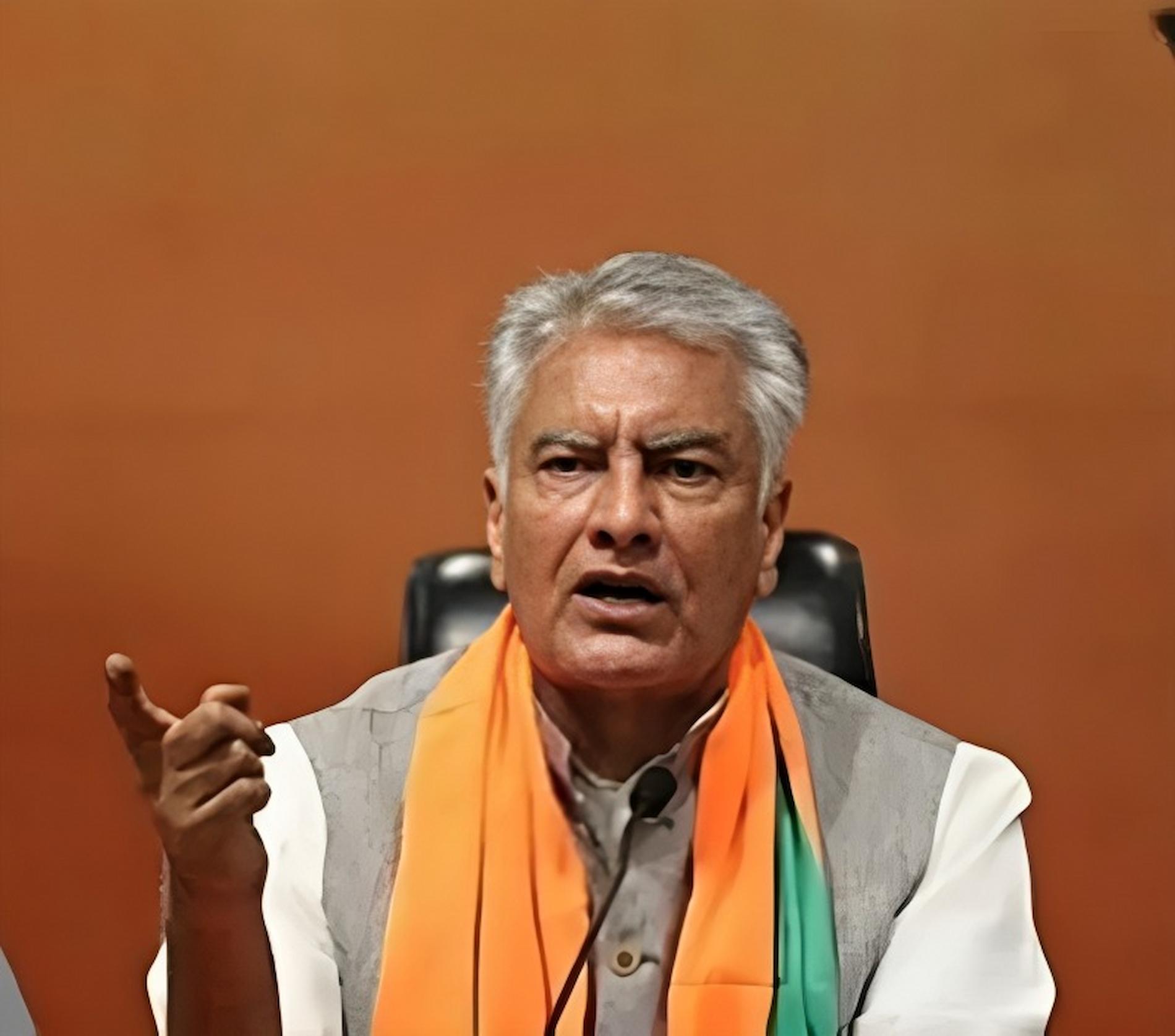
In a politically charged appeal that has reignited conversations about alliances and stability in Punjab, Sunil Jakhar, a senior BJP leader and former Congress veteran, has urged the reinstatement of the BJP-Akali Dal alliance. Calling it essential for maintaining communal harmony and regional peace, Jakhar’s statement comes at a crucial moment, as political equations in the state continue to shift ahead of the 2025 Punjab Assembly elections.
Speaking during a press conference in Amritsar, Jakhar emphasised that the BJP-SAD alliance in Punjab 2025, due to its complex social and religious fabric, cannot afford fragmented politics and divisive campaigns. His remarks drew attention not only for their timing but for their implications—both for the BJP’s electoral strategy and for the Shiromani Akali Dal’s future positioning.
“Peace in Punjab cannot be compromised. Political maturity must take precedence over party ego,” Jakhar asserted, urging both parties to look beyond past conflicts and focus on collective responsibility.
The BJP and SAD, once traditional allies in Punjab’s political landscape, parted ways in 2020 following a deep rift over the now-repealed farm laws. The split led to widespread electoral and social consequences, particularly in rural areas where the Akali Dal draws substantial support. Since then, the BJP has struggled to gain traction in several constituencies, while the SAD has attempted to distance itself from its former ally to rebuild credibility among its voter base.
Jakhar’s remarks come at a time when Punjab politics is in flux. The ruling Aam Aadmi Party (AAP) is facing growing scrutiny over its governance, while the Congress continues to reel from internal discontent and leadership crises. In such a climate, a potential BJP-SAD alliance 2025 elections strategy could reshape the battleground, especially if it is built on shared messaging around unity, peace, and development.
What makes Jakhar’s statement especially significant is his cross-party experience. Having served in senior roles within the Congress and now in the BJP, he brings a nuanced perspective on Punjab’s socio-political challenges. His call for re-engagement between the BJP and SAD is seen by many as more than a personal opinion—it could be an early indication of evolving internal strategies, especially with election planning already underway across party lines.
The History: A Fractured Alliance
The BJP-SAD alliance, once a longstanding and influential political partnership, fractured in 2020 following disagreements over the now-repealed farm laws. The split altered Punjab’s political landscape, forcing both parties to realign and seek new partners.
Jakhar’s remarks are being seen as a strategic appeal to rebuild old bridges and offer voters a consolidated front, particularly in rural Punjab, where the Akali Dal still holds sway among Sikh voters.
Political analysts say Sunil Jakhar’s latest statements may indicate internal BJP efforts to reconfigure alliances ahead of the 2025 polls. Jakhar, a former Congress stalwart who joined the BJP in 2022, has gained influence within the party’s Punjab unit and is recognised for his moderate and consensus-building approach.
Official Reactions: Cautious Yet Watchful
Reacting to Jakhar’s suggestion, SAD spokesperson Daljit Singh Cheema stated that while the past cannot be ignored, the Akali Dal is open to dialogue.
“Our priority has always been the welfare of Punjab and the protection of Sikh values. If the BJP is willing to respect our principles and past mistakes are acknowledged, we can consider a future discussion,” Cheema told reporters in Chandigarh.
On the other hand, BJP’s Punjab president Ashwani Sharma responded with cautious optimism.
“Sunil Jakhar is a seasoned leader. His views reflect the mood of many who seek unity over division. But alliance decisions will be taken at the highest level after due consultation,” Sharma said.
Insiders suggest that the central BJP leadership has yet to formally respond, although a few senior party functionaries have privately welcomed the idea as “practical.”
Eyewitness View: A Voice of Reason
Attendees at Jakhar’s address in Amritsar applauded his call for unity. Ravinder Singh, a local businessman present at the event, said the message resonated with many.
“People are tired of division. If the BJP and Akali Dal can come together and stop petty politics, Punjab can finally see stability,” he said.
Similarly, Kulwinder Kaur, a school teacher from Tarn Taran, felt that communal tensions have increased in recent years, and a combined leadership could help bring down the temperature.
“We don’t need more conflict. We need jobs, peace, and cooperation,” she noted.
Punjab’s Fragile Peace and Political Volatility
Punjab has experienced intermittent communal tensions, particularly following the 2020 farmers’ protests. The fractured political structure has only made governance more difficult. Jakhar’s pitch comes at a time when Punjab politics alliance updates dominate the headlines.
According to a recent survey by the Punjab Policy Institute, nearly 64% of voters favour pre-poll alliances that promise governance over ideology. The same report indicated that public trust in standalone parties had declined after the 2022 elections.
Political expert Dr. Amrita Bains explains the context:
“Punjab’s unique mix of religion and politics means coalitions must be carefully crafted. The BJP Akali Dal tie-up news is important because it signals an attempt at rebuilding that social trust.”
Sunil Jakhar’s Political Strategy
Sunil Jakhar’s latest statements, spanning both Congress and now the BJP, give him a rare vantage point. His role in promoting alliances is viewed as both ideological and strategic.
Since switching sides, Jakhar has attempted to reposition the BJP as a centrist and inclusive force in Punjab, a state where it still struggles with perception issues post the farm law protests.
His statements are part of a broader narrative aimed at cleansing the BJP’s image in Punjab and building bridges with communities that have drifted away.
Sources close to Jakhar indicate that his recent efforts are supported by internal surveys, which suggest that the BJP stands a better chance in the upcoming elections with an SAD alliance, particularly in districts such as Bathinda, Mansa, and Faridkot.
Voices from the Ground: Mixed but Hopeful
The public response to the idea of a BJP-SAD alliance for the 2025 elections appears mixed but generally hopeful.
In Ludhiana, Harpreet Gill, a retired banker, remarked:
“If they can promise peace and not fight for chairs, it’s a good idea. But people won’t forget the betrayal on farm issues so easily.”
Meanwhile, in Patiala, farmer leader Jaswinder Sandhu expressed scepticism.
“It’s not about alliances. It’s about action. If they care about farmers and not just votes, let’s see it on the ground.”
This reaction reflects a critical challenge: winning back public trust while addressing core issues such as agriculture, employment, and law and order.
Implications for the 2025 Elections
As political realignments begin to take shape, Jakhar’s call for unity might be a turning point in Punjab’s pre-election narrative.
Key implications include:
- Boost in rural influence: SAD’s traditional rural base could benefit the BJP electorally.
- Consolidation of Hindu-Sikh vote banks: A combined front could present a stable, united leadership image.
- Pressure on AAP and Congress: Both ruling and opposition parties may face added pressure to recalibrate their strategies.
Political columnist Ramesh Dutt notes:
“If this alliance materialises, it can shift Punjab’s election axis entirely. The Aam Aadmi Party may struggle to hold ground.”
Conclusion
Sunil Jakhar’s call for a renewed BJP-Akali Dal alliance is more than just a political soundbite; it is a strategic and symbolic move aimed at reviving unity in one of India’s most sensitive and politically dynamic states. As Punjab continues to grapple with economic pressures, communal sensitivities, and a volatile political climate, the prospect of a united front between two former allies could offer a new roadmap for governance and growth.
However, while the statement has initiated a fresh round of discussions, many questions remain unanswered. Will the BJP and SAD be able to rebuild the trust that once defined their relationship? Can both parties reconcile their differences in policy, perception, and leadership? And most importantly, will voters accept a renewed alliance, especially those who felt alienated during the 2020 farm law controversy?
Political leaders from both parties have so far responded with measured interest, leaving the door open for further negotiation. The BJP Akali Dal tie-up news continues to dominate headlines, with party insiders suggesting that talks may progress quietly in the coming weeks. If such a reunion does materialise, it will not only shape the Punjab elections in 2025 but also send a broader message across Indian politics: that pragmatism and peace can outweigh partisanship.
Looking ahead, the coming months will be critical. Public outreach, policy clarity, and symbolic gestures of unity will be necessary if this potential alliance is to move beyond political theatre and into real electoral substance. For now, Sunil Jakhar’s vision of a unified leadership focused on promoting communal harmony in Punjab has re-entered the political narrative—and it’s a conversation the state cannot afford to ignore.