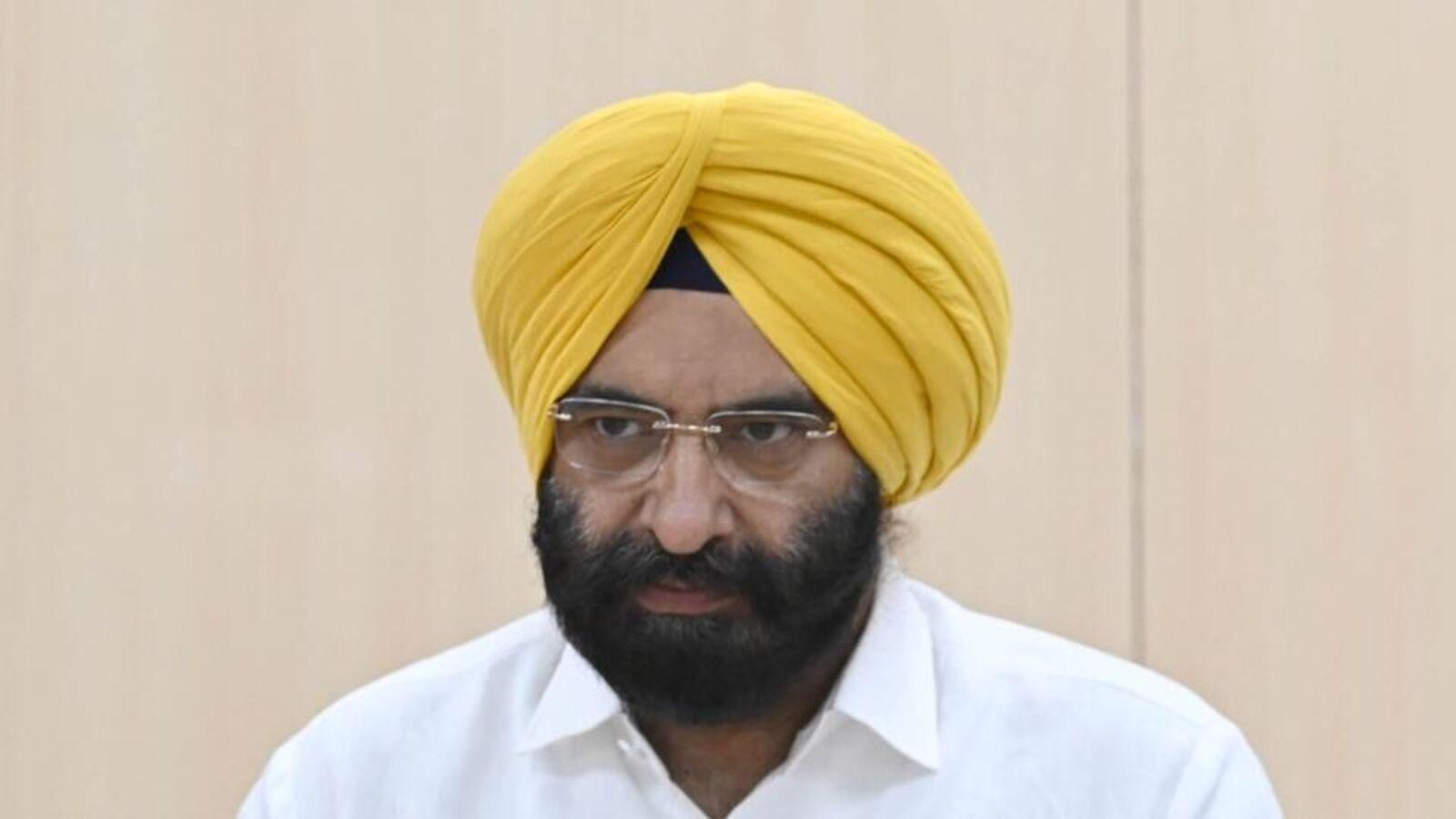
A fresh political storm has erupted as BJP leader Manjinder Singh Sirsa launched a sharp attack on Delhi Chief Minister Arvind Kejriwal, blaming the AAP government for the ongoing Punjab stubble burning issue. Sirsa accused Kejriwal and his party of misleading the public over Delhi’s pollution crisis while “failing Punjab’s farmers.” His remarks come after AAP spokesperson Saurabh Bharadwaj’s controversial post on stubble burning sparked a fierce political debate. The Manjinder Singh Sirsa Kejriwal stubble burning row highlights the growing political tension between the BJP and AAP ahead of the upcoming elections.
Overview
The political temperature in North India is soaring as the Manjinder Singh Sirsa Kejriwal stubble burning row takes centre stage. BJP leader Manjinder Singh Sirsa, in a fiery statement, called Delhi Chief Minister Arvind Kejriwal “Anpadh” (illiterate) and accused the Aam Aadmi Party (AAP) of forcing Punjab’s farmers into an environmental and economic crisis. The remarks came after AAP spokesperson Saurabh Bharadwaj shared a social media post that appeared to blame Punjab farmers for Delhi’s pollution spike. Sirsa’s comments have reignited the ongoing BJP vs AAP Punjab politics, deepening the divide over accountability in the Punjab stubble burning issue. As both sides trade barbs, political analysts see this as more than a local dispute — it’s a reflection of a high-stakes power play ahead of national elections. The controversy underscores how pollution, policy, and politics continue to intertwine in North India’s governance debates.
1. Context and Background: How the Row Erupted
The Manjinder Singh Sirsa Kejriwal stubble burning row began after AAP leader Saurabh Bharadwaj posted a remark implying that Punjab farmers were responsible for Delhi’s toxic air. This statement drew widespread criticism, especially from BJP leaders, who accused AAP of blaming the state’s farmers instead of addressing pollution at its root.
Sirsa, once a key figure in the Shiromani Akali Dal (SAD) before joining the BJP, quickly entered the debate, accusing AAP’s Punjab government of hypocrisy. He claimed that Kejriwal had failed both Delhi and Punjab by making empty promises about solving farm fires.
The Punjab stubble burning issue has long been a flashpoint between state and national politics, particularly during the winter pollution crisis in North India. This year, with the Punjab political updates 2025 gaining momentum, the issue has taken on renewed political significance.
2. The Remarks and Political Exchange
Manjinder Singh Sirsa’s attack was direct and sharp. Calling Arvind Kejriwal “Anpadh”, he accused the Delhi CM of lacking a basic understanding of Punjab’s agricultural and environmental realities. He further claimed that AAP’s governance had “pushed Punjab’s farmers to desperation” by not offering viable alternatives to crop residue burning.
Sirsa also criticised Saurabh Bharadwaj, AAP, for his post, calling it an “insult to the farming community.” The BJP leader argued that the Delhi government had failed to implement solutions like biomass plants or financial support for residue disposal.
AAP leaders, however, hit back. A party spokesperson claimed that the BJP was “weaponising pollution” to divert attention from the Farm fire crisis in North India and the Centre’s inaction. They argued that AAP had taken multiple initiatives, including deploying crop decomposers and awareness drives.
The heated exchange has once again turned the environmental debate into a stubble-burning political debate, where blame dominates over solutions.
3. The Stubble Burning Issue: A Chronic Governance Challenge
Each winter, thousands of farmers across Punjab burn leftover paddy stubble to prepare fields for the next crop. The smoke travels across borders, worsening air quality in Delhi, Haryana, and surrounding regions. The Punjab stubble burning issue is not new — but political accountability remains contested.
According to the latest reports from the Election Commission of India and state agencies, over 25,000 farm fire incidents were recorded in Punjab this season — a slight increase from last year. Environmental experts warn that without large-scale adoption of mechanised residue management, the crisis will persist.
While the AAP government in Punjab claims it has distributed subsidies for stubble management machines, many farmers argue that the support is insufficient. The Punjab farmers’ protest groups allege that state policies ignore their financial struggles, forcing them to burn crop residue as a last resort.
4. Political Implications: BJP vs AAP Punjab Politics Intensifies
Sirsa’s comments come at a crucial time when both parties are preparing for the Punjab political updates 2025 and the upcoming parliamentary elections. His remarks are widely seen as part of the BJP’s strategy to corner AAP on its governance record.
The BJP has consistently accused Kejriwal of using Delhi’s pollution crisis for political optics while failing to coordinate with Punjab. Sirsa’s attack aligns with the BJP’s broader narrative of “AAP’s administrative failure.”
For AAP, however, this controversy could serve as a rallying point to defend its governance model. Party insiders say AAP plans to highlight its investment in green technology and farmer incentives. But analysts believe the Arvind Kejriwal controversy could hurt AAP’s image if it alienates rural voters in Punjab.
The Kejriwal Punjab policy criticism reflects a growing divide between Delhi’s political leadership and Punjab’s ground realities, making this a defining issue in the Farm fire crisis in North India.
5. Media and Public Reactions: Social Media Turns Battleground
Sirsa’s remarks went viral within hours, with social media platforms erupting into heated debates. Hashtags like #AAPvsBJP, #PunjabPollution, and #SirsaKejriwalRow trended across X (formerly Twitter).
AAP supporters defended their leadership, accusing the BJP of politicising the pollution debate. Meanwhile, BJP supporters amplified Sirsa’s comments, labelling Kejriwal’s policies as “anti-farmer.”
Journalists and environmentalists expressed disappointment that the stubble-burning political debate has become more about mudslinging than meaningful solutions. Farmer unions like Bharatiya Kisan Union (BKU) also weighed in, stating that “no party has addressed farmers’ real issues — only used them for politics.”
Media coverage across television and digital platforms has remained polarised. Some outlets focused on Sirsa’s personal attacks, while others examined the deeper political reactions to the Punjab pollution debate, framing it within India’s broader environmental governance crisis.
6. Broader Political Context: AAP-BJP Rivalry Deepens
The Manjinder Singh Sirsa Kejriwal stubble-burning row is not an isolated incident. It follows years of bitter exchanges between AAP and BJP over pollution, governance, and power in Punjab.
Sirsa, once an ally of the Shiromani Akali Dal (SAD), joined the BJP in 2021 and has since been vocal against AAP’s policies. He has often targeted the party on corruption, education, and now environmental mismanagement.
AAP, on the other hand, has accused the BJP of neglecting farmers and using the Delhi air pollution blame game as a political tool. The timing of this row, ahead of major state elections, suggests deeper political manoeuvring.
Analysts see this as part of a national pattern where regional issues — such as stubble burning — become platforms for the BJP attack on AAP, influencing both state and national narratives in the Upcoming elections in India 2025.
7. Conclusion: A Battle of Blame, Not Solutions
The Manjinder Singh Sirsa Kejriwal stubble-burning row underscores how environmental crises in India are often reduced to political point-scoring. As pollution levels rise and farmers struggle with policy uncertainty, the focus remains on blame rather than reform.
Sirsa’s comments have once again exposed the fragile politics behind Punjab’s governance challenges. Whether AAP’s defence or BJP’s attacks will sway public opinion remains to be seen, but one thing is clear — the issue of Punjab stubble burning will continue to shape the state’s political discourse.
Until genuine collaboration replaces confrontation, Punjab’s skies may stay smoky — and its politics even murkier.
Stay tuned for more Punjab political updates 2025 as the AAP-BJP rivalry reshapes the region’s environmental and electoral future.