In a bid to reclaim its eroding foothold in Punjab, senior Congress leaders have issued an urgent call for reform. Bhupesh Baghel, the All India Congress Committee (AICC) in-charge of Punjab, was confronted with a stark reality in a series of high-level meetings this past week: the party’s current trajectory could render it politically irrelevant in one of India’s most dynamic states by the time of the Punjab Assembly Elections 2027. The message from grassroots workers to former ministers was clear—the state unit requires a complete overhaul, a unifying leadership, and a fresh vision. With the scars of electoral defeats still fresh and internal rifts deepening, Congress must act swiftly to reset its Punjab strategy or risk permanent displacement by the Aam Aadmi Party and BJP. At stake is not just a state assembly, but the party’s national narrative and standing within the I.N.D.I.A opposition bloc.
Over the last ten days, a series of confidential meetings were held in Chandigarh, Ludhiana, and Delhi, attended by Bhupesh Baghel, state Congress leaders, MLAs, ex-ministers, and political advisors. These discussions were not routine reviews—they were emergency strategy sessions, spurred by internal reports highlighting the party’s weakening grassroots connect, poor organisational discipline, and growing disillusionment among core supporters.
According to sources, several veteran leaders bluntly told Baghel that unless decisive restructuring measures are taken within the next three months, the 2027 Punjab Assembly elections may become another disaster, much like the humiliating defeat in 2022 when the party lost power to the AAP.
“This is not a post-mortem. This is a survival strategy,” said a former cabinet minister who attended the Chandigarh meeting.
“We have one final window to course-correct. If we miss it, we’ll vanish from Punjab.”
Key Concerns Raised by Party Leaders
The meetings brought to light a range of strategic, structural, and leadership issues that have plagued the Punjab Congress in recent years and hindered its Election preparedness 2027:
1. Persistent Infighting and Leadership Vacuum
- Deepening rivalries between factions led by Charanjit Singh Channi, Navjot Sidhu, and Amarinder Singh’s loyalists.
- No clear or widely accepted face to lead the party into the Punjab Assembly Elections 2027.
- Delayed decisions on leadership appointments are confusing at the local level.
2. Weak Organisational Network
- Lack of active block-level committees in over 60% of Punjab districts.
- Office bearers are occupying posts without accountability or performance reviews.
- Absence of structured grassroots campaigns post-2022 elections.
3. Disconnect with Key Voter Blocs
- Youth are increasingly turning to AAP and other alternatives.
- Farmers—once Congress’s loyalists—now split between AAP and issue-based movements.
- Urban middle-class voters are shifting toward the BJP.
“Our campaign looked like it was stuck in 2005,” said a party strategist.
“Meanwhile, AAP was on every phone screen. We lost not just votes, but visibility.”
Baghel’s Response: Listening Mode Activated
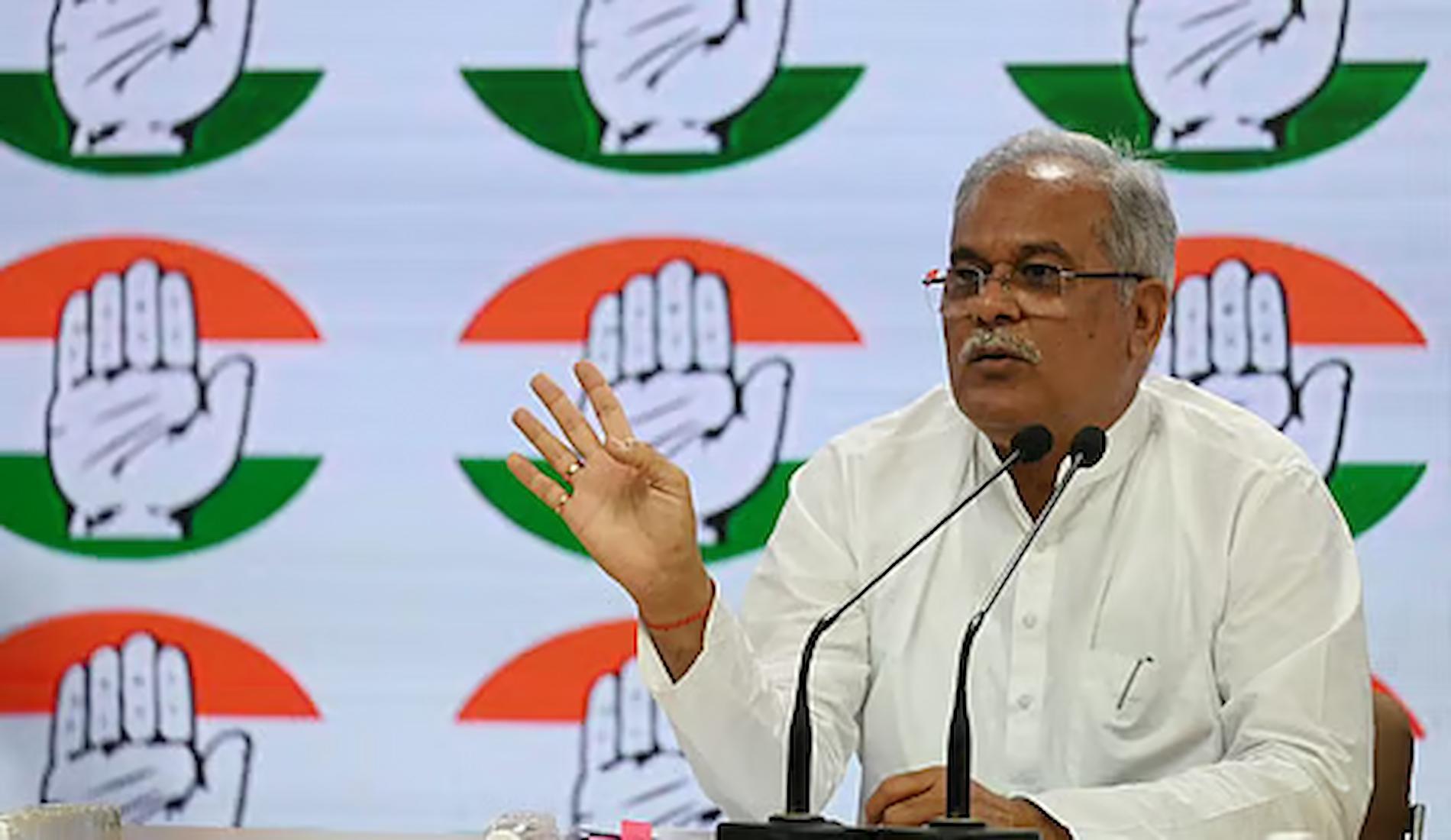
Bhupesh Baghel, known for his grassroots approach in Chhattisgarh, has so far taken a measured and listening-first strategy in Punjab. He has met with nearly every MLA and district president over the last month. He is reportedly compiling a detailed report for the Congress Working Committee (CWC) meeting scheduled in August.
Sources close to Baghel say he is “deeply concerned but committed to a reset.” His plan is expected to reflect a bold Congress strategy for Punjab, featuring:
- Dissolving the current state executive and reconstituting it with performance-driven appointments.
- Creating regional campaign units led by younger, tech-savvy leaders.
- Initiating “Punjab Dialogue Sessions” with farmers, youth, entrepreneurs, and women to crowdsource campaign issues.
“Baghel understands that Punjab cannot be won from Delhi,” a senior AICC functionary noted.
“He wants the state unit to lead, not follow.”
This approach marks the beginning of a broader Bhupesh Baghel Punjab revamp that insiders say will span organisational, leadership, and voter-outreach fronts.
Leadership Question: Who Will Be the Face of 2027?
Perhaps the most divisive yet critical issue is the leadership vacuum at the state level. In 2022, the last-minute elevation of Charanjit Singh Channi failed to unify the ranks or energise voters. Now, leaders are demanding clarity much earlier.
Contenders Being Discussed:
- Navjot Singh Sidhu: Charismatic but controversial; still polarising among cadres.
- Charanjit Singh Channi: Seen as a Dalit face but has lost ground after the 2022 defeat.
- Amarinder Singh Raja Warring: Young, energetic, former Punjab Congress chief; seen as a moderniser.
- Sukhpal Singh Khaira: Vocal in the Assembly, considered articulate and grounded.
Yet, none has emerged as a consensus choice. Party leaders suggest a survey-based decision-making process involving workers, not just top-down imposition.
“Let the people decide. We need a face that can win hearts, not just press conferences,” said a district-level youth leader.
This dilemma is at the heart of ongoing discussions around Punjab Congress leadership changes, which are expected to be finalised by year-end.
Delhi’s Involvement: High Command Takes Stock
The seriousness of the Punjab situation has reached the top levels of the Congress party. Rahul Gandhi and Mallikarjun Kharge are being briefed regularly, and multiple back-channel assessments have been launched.
Actions Initiated by AICC:
- Deployment of observers to monitor district-level performance.
- Formation of a Punjab Revamp Task Force within the party’s organisational affairs unit.
- Plans to begin booth-level training camps from September onwards.
There is growing realisation that Punjab is not an isolated case, but part of a broader need for Congress to professionalise its electoral machinery and reclaim its lost messaging ground.
“You can’t fight 21st-century battles with 20th-century tools,” said a strategist involved in the political reforms in the Punjab Congress.
“We need data, discipline, and a decentralised approach.”
Voices from the Ground: Cadres Want Clarity and Energy
Across Punjab, many party workers express frustration at the current drift. Several have spoken out in internal meetings and memos to Baghel and the AICC.
Key Demands from Local Workers:
- Clear communication from state leaders.
- Immediate appointments at the district and block levels.
- Regular interactions, not just during election season.
- A campaign that addresses real issues—jobs, agriculture, drug menace, and education.
“We don’t want leaders who only tweet,” said Ramesh Kumar, a Congress worker from Hoshiarpur.
“We want leaders who listen, visit villages, and walk with us.”
The Competition: AAP Consolidating, BJP Reorganising
While Congress is attempting an internal reset, rivals are already on the move.
Aam Aadmi Party (AAP):
- Strengthening its grassroots hold through governance initiatives.
- Launching “Mission 2027” with constituency-level performance tracking.
- CM Bhagwant Mann remains popular in many pockets, though facing criticism over law and order.
Bharatiya Janata Party (BJP):
- Expanding its urban base post-Akali split.
- Targeting Hindu voters in Ludhiana, Amritsar, and Patiala.
- Building alliances with local influencers, NRIs, and industrialists.
This evolving landscape leaves little room for Congress to delay its Congress strategy for Punjab.
“Every month we wait, our competitors take ten steps forward,” a former Congress MP warned.
Wider Implications: Punjab’s National Relevance
Punjab is more than just a state for Congress. It carries historical weight, symbolic value, and electoral significance.
- Religious and cultural influence extends beyond the state, especially among diaspora communities.
- The farmer narrative, crucial to national politics, often begins in Punjab.
- It serves as a test ground for opposition unity and message effectiveness in North India.
A weak showing in Punjab Assembly Elections 2027 could damage Congress’s role in any national coalition and weaken its ideological base.
The Path Forward: What Congress Must Do
To re-establish itself in Punjab, political analysts and insiders suggest a four-pronged strategy:
1. Rebuild the Organisation
- Full overhaul of state leadership.
- Fresh appointments with KPIs and accountability.
- Focus on booth-level presence.
2. Craft a Fresh Narrative
- Shift focus from personalities to policies.
- Address youth, agriculture, drug crisis, and economic opportunity.
- Emphasise regional pride and inclusive governance.
3. Digital and On-Ground Campaign Sync
- Use social media aggressively to counter AAP’s digital push.
- Parallel on-ground campaigns to restore visibility.
4. Leadership Clarity and Unity
- Early decision on CM face.
- Encourage a culture of consensus, not confrontation.
Conclusion: Time Running Out for a Turnaround
Punjab stands at a political crossroads—and so does the Congress. With the memory of its 2022 defeat still looming large, the party has a narrow window to rebuild, rebrand, and reconnect. The warnings delivered to Bhupesh Baghel are not just internal feedback—they are a wake-up call echoing across the Congress ecosystem.
If Baghel and the high command act decisively, prioritise unity over egos, and rebuild the grassroots with a clear vision, the Punjab Assembly Elections 2027 could become a story of redemption. But if they continue with half-measures and delayed decisions, Congress may soon find itself a footnote in a state it once ruled with confidence.